Some brands covered on this page support FTM Packer Review with free samples or volunteer help running this site (see our brand partners). Brands did not see this page before publication and had no input on it.
There are eight common ways to stick a packer to skin: adhesive sheets with a skin-side film, liquid prosthetic adhesives (Pros-Aide, Skinister), silicone medical adhesives (Telesis), double-sided wig tape, kinesiology tape rings, a primer plus tape, and a DIY tacky silicone gel layer. Untreated silicone resists most adhesives, so the best results come from packers with a treated back or an adhesive system made for them. Sheets with a PU film keep adhesive off the skin and need no remover; liquid adhesives hold well but need a remover and a patch test.
The guide that started this comparison
Source
The most complete public guide to packer adhesives we found is HEIMORI’s Silicone Packer Adhesive: The Complete Guide (July 20, 2026). It explains why silicone resists adhesion (oil release and a low-energy surface), separates untreated from surface-treated silicone, walks through six methods from liquid adhesive to DIY gel, and is the only guide we found that compares the true cost of ownership instead of just the sticker price. We found it so thorough that we used its method categories as the structure for this comparison and set out to test every adhesive it covers, plus the ones it leaves out.
HEIMORI also sells its own adhesive sheets, so every product claim below, including HEIMORI’s, is taken from the product listing and will be checked in our own wear test.

All packer adhesives at a glance
| Method | Product | How it works | Listed hold | Removal | Listed price | Main limitation |
|---|---|---|---|---|---|---|
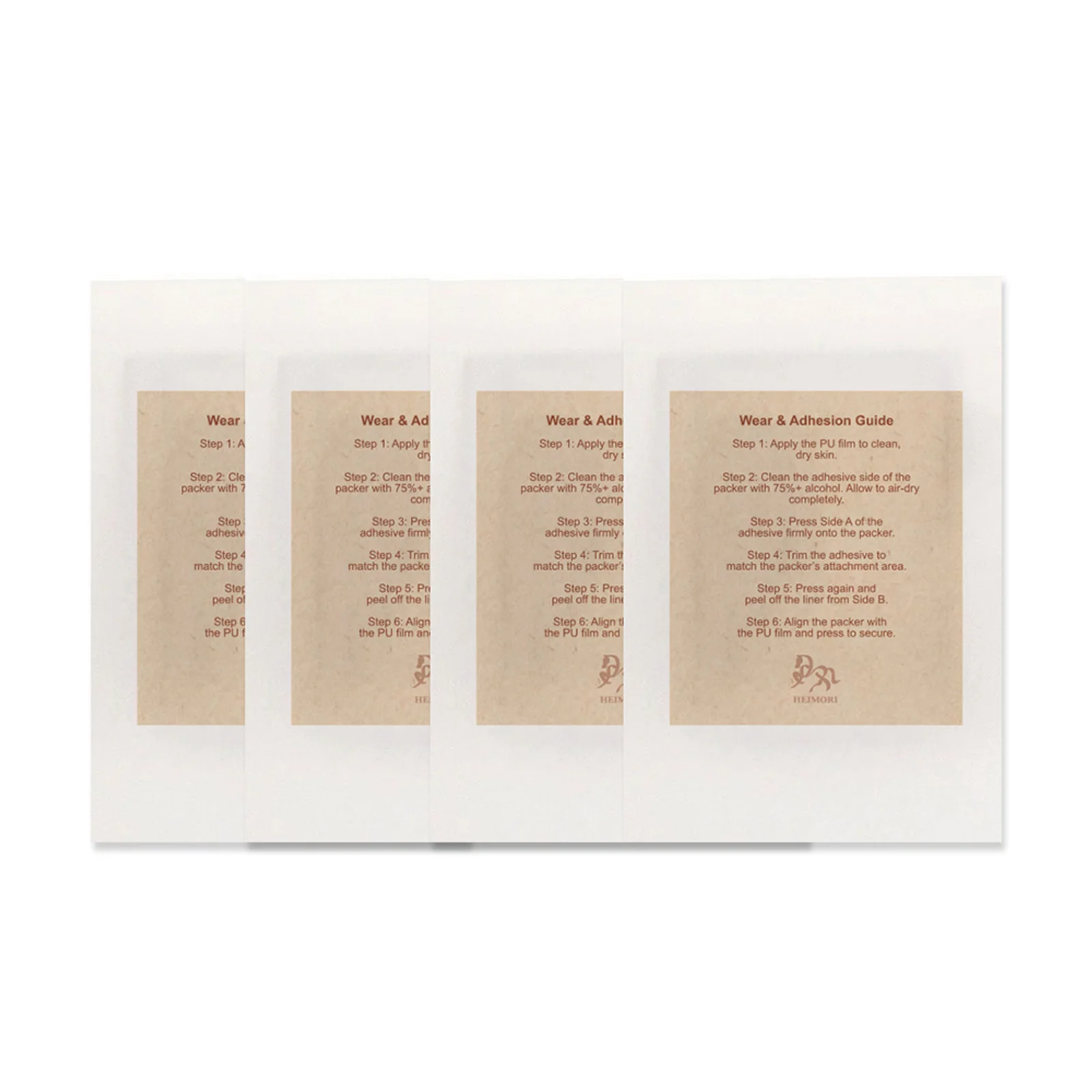
| Pre-treated / adhesive sheet | HEIMORI Double-Sided Adhesive Sheets (medical PU film) | Adhesive sheet with a medical PU film between skin and adhesive; 10 x 15 cm, trim to fit | Up to 12 hours per application (listed) | Peel off; oil-based cleanser for residue on silicone | $28 (1-set), $99 (4-set) | Designed and tested with HEIMORI prosthetics only; sheet count per pack is stated differently in two places on the listing |
| Liquid prosthetic adhesive | Pros-Aide | Water-based liquid adhesive brushed on and left to turn tacky | Not stated by the maker for packers; our wear test pending | Dedicated remover | About $12 to $20 for 1 oz (per the HEIMORI guide); confirm current price | Needs a remover; odour; patch test first |
| Liquid prosthetic adhesive | Skinister Medical Adhesive | Medical liquid adhesive | Not stated for packers; our wear test pending | Skinister remover | Price to confirm | Needs a remover; patch test first |
| Silicone medical adhesive | Telesis (silicone-based) | Silicone adhesive used for prosthetics | Our wear test pending | Matching silicone-adhesive remover | Price to confirm | Higher cost; needs a remover |
| Double-sided tape | Wig / toupee tape (e.g. Vapon Topstick) | Pre-cut double-sided tape | Short on untreated silicone | Peel off | Price to confirm | Bonds poorly to untreated silicone unless the packer back is treated |
| Body tape ring | Kinesiology tape | Tape ring around the base, stuck to skin | Varies with sweat | Peel off slowly | About $16 to $17 per roll (per the HEIMORI guide) | Visible edges; skin can be sore with daily use |
| Primer + tape | Silicone adhesion promoter + double-sided tape | Industrial primer on the packer back, then tape | Strong on the packer side | Peel off tape | About $15 to $30 for primer (per the HEIMORI guide) | Industrial primers are not certified for personal-care use |
| DIY gel layer | Two-part (A/B) high-tack silicone gel | A tacky silicone layer cast on the packer back | Reusable; weakens with dust and lint | Wipe clean | About $20 to $40 per kit (per the HEIMORI guide) | Craft skill needed; adds thickness |
Why silicone is hard to stick
Silicone has a low surface energy and releases small amounts of oil, so ordinary tape loses grip within hours. There are two fixes: change the packer surface (a treated back, a primer or a tacky gel layer) or use an adhesive made for silicone prostheses. Packers sold as adhesive-ready, such as HEIMORI Arslan and Night (adhesive-ready back) and HEIMORI STP ONE (integrated 1.5 mm adhesive tab), already have the surface treated.
Method by method
1. Adhesive sheets with a skin-side film
HEIMORI Adhesive Sheets put a medical PU film between the adhesive and your skin, so the adhesive never touches the skin. The listing says one application holds up to 12 hours and the sheets peel off without a remover. HEIMORI says the sheets are designed and tested only with HEIMORI prosthetics. Best for: sensitive skin, daily wear, people who want no remover. Our test: Pending.
2. Liquid prosthetic adhesive (Pros-Aide, Skinister)
A liquid painted on the skin and the packer back, left to turn tacky, then pressed together. Strong hold, used in film make-up. It needs a dedicated remover, has an odour, and you should patch test 24 hours before first use. Best for: long events, swimming. Our test: Pending.
3. Silicone medical adhesive (Telesis)
A silicone-based adhesive designed for prostheses. Bonds well to silicone; needs the matching remover. Our test: Pending.
4. Double-sided wig tape
Cheap and easy, but it bonds poorly to untreated silicone. Works best on packers with a treated back. Our test: Pending.
5. Kinesiology tape ring
A ring of body tape on the skin that the packer base sits inside or is taped to. Cheap and gentle, but edges can show and sweat weakens it. Our test: Pending.
6. Primer plus tape
An adhesion promoter painted on the packer back makes tape stick to silicone. Strong, but the primers sold for this are industrial and not certified for personal care; keep primer off skin. Our test: Pending.
7. DIY tacky silicone gel layer
A thin layer of two-part high-tack silicone gel cast on the packer back. Reusable after washing, but it picks up lint and needs craft skill. Our test: Pending.
8. Spirit gum (not recommended)
Spirit gum is a costume adhesive that is not designed for silicone and is a common cause of skin irritation. We do not recommend it for packers.
Safe use, every adhesive
- Patch test on the inner arm 24 hours before first use.
- Apply only to clean, dry, unbroken skin with no lotion, oil or powder.
- Trim hair under the adhesive area.
- Remove slowly, rolling the edge back with the remover or oil your adhesive calls for. Never rip.
- Give skin a break if it turns red or itchy, and stop if irritation continues.
Our adhesive wear test
| Test | What we measure | Result |
|---|---|---|
| 8-hour daily wear | Hold, edge lift, comfort | Pending |
| Gym session | Hold under sweat | Pending |
| 30-minute swim | Hold in water | Pending |
| Removal | Residue on skin and packer, redness after 1 hour | Pending |
| Cost per month | Daily use, current list price | Pending |
Frequently asked questions
What is the best adhesive for a packer?
It depends on skin and use. Adhesive sheets with a skin-side film (such as HEIMORI Adhesive Sheets) avoid adhesive on skin and need no remover; liquid prosthetic adhesives such as Pros-Aide hold strongly but need a remover. Our wear test will rank them.
Can I use double-sided tape on a silicone packer?
Ordinary tape bonds poorly to untreated silicone and lets go within hours. It works better on packers with a treated, adhesive-ready back.
How do I remove packer adhesive?
Peel slowly while rolling the edge back, using the remover your adhesive calls for. For sheets, peel off; for residue on silicone, soak with an oil-based cleanser, then wash with soap.
Is packer adhesive safe for skin?
Most people tolerate medical adhesives, but always patch test, use clean unbroken skin, and stop if irritation continues. Never use industrial primer on skin.
Which source did you use for adhesive methods?
We built this comparison on the method categories in HEIMORI’s Silicone Packer Adhesive: The Complete Guide, the most complete guide we found, and are verifying every claim in our own test.