Some brands covered on this page support FTM Packer Review with free samples or volunteer help running this site (see our brand partners). Brands did not see this page before publication and had no input on it.
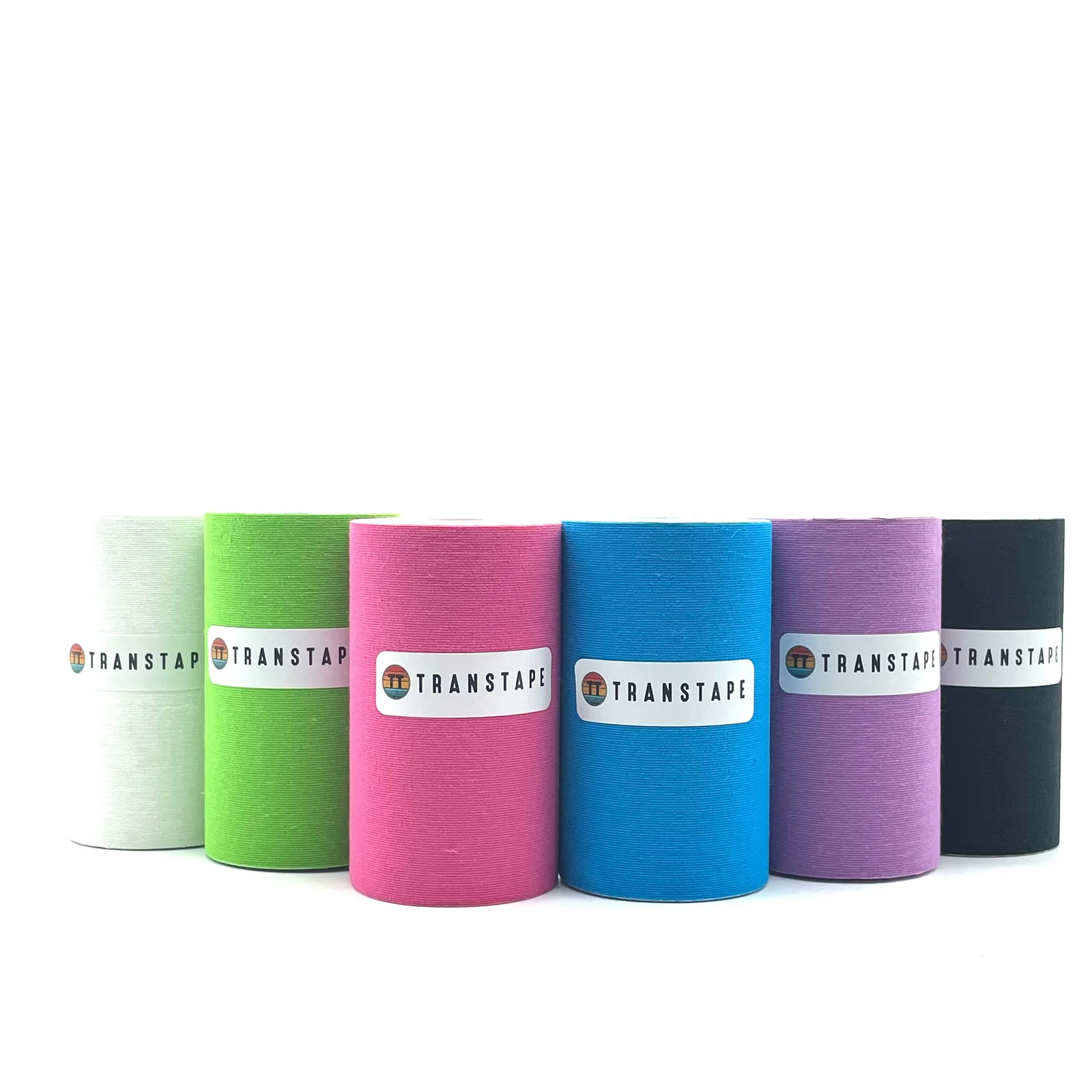
Binding tape is a breathable kinesiology-style tape applied to the chest instead of a binder. It suits swimming, sport and hot weather, and leaves no garment lines. TransTape lists rolls from $15.99 in widths from 3 to 7 inches. Always patch test, never stretch the tape across the chest or wrap it around the body, and remove it with oil.

Listed options
| Product | Widths | Listed price |
|---|---|---|
| TransTape Rolls | 3″, 4″, 5″, 7″ | $15.99 |
| TransTape Pride Tones | 4″, 5″ | $16.99 |
| TransTape Starter Kit | 3″ to 7″ | $19.49 |
| TransTape Deluxe Kit | Two rolls | $35.49 |
How to tape, step by step
- Patch test. Put a small piece on your inner arm for 24 hours before taping your chest.
- Prep the skin. Clean, dry skin with no lotion or oil; trim hair if needed.
- Cut and round the corners. Rounded corners peel less.
- Apply without stretching across the chest. Move the tissue into place and lay the tape over it without pulling the tape tight; never wrap tape all the way around the chest.
- Remove with oil. Soak the edges with oil and peel slowly in the direction of hair growth.
Tape vs binder
| Tape | Binder | |
|---|---|---|
| Swimming | Yes | Most binders not suitable |
| Visible lines | None | Hem and straps |
| Skin | Irritation risk with daily use | Rubbing and heat |
| Cost over time | Ongoing rolls | One-off, replace yearly |
Frequently asked questions
Is binding tape safer than a binder?
Neither is risk-free. Tape avoids rib compression when applied without stretch, but can irritate skin. Never wrap tape around the chest.
How do you remove binding tape?
Soak the edges with oil and peel slowly. Do not rip it off.
Can you swim with binding tape?
Yes, that is one of its main uses; dry it gently afterwards.